
Category: Writing

How to’s on writing books, articles, essays, pretty much anything. If I’ve done it, you can too.

  • ReWrite Conference Takeaways for Non-writers and Writers

    Edge Conference by Jeffrey Zeldman at flickr

    You ever spend time on an event for a specific reason, and then get something completely different out of it?

    I came to the ReWrite conference last week expecting to get a lot of tips on how to improve on marketing, and perhaps figure out when a traditional publishing deal would be worth my while.

    What happened instead is that I ran into my people.

    You know, your people? A group you can be yourself around?

    If I’m lucky I develop friendships with 1-2 of those kinds of people per year.

    Imagine running into 100 of them in 2 days.

    Esther Fedorkevich of the Fedd Agency set a strong, indie-friendly tone in spite of her traditional publishing background. The feud between indies and traditional publishers is fading fast, and she is definitely part of the solution in that area. Rest assured, I still hammered her employees with ‘Audit the Fed’ jokes.

    Personally, as long as I live in a relatively free part of the world, I’ll use whichever route achieves the goals that matter to me, as long as those decisions are legal, moral, and ethical.

    Traditional? Sure, why not?

    Indie? Sure, why not?

    Keynote speaker was Ted Dekker, who wrote the Circle series, Thr3e (also a movie), and many other bestselling novels.

    People who stood on stage and said things

    Like the subtitle? The tone of the festival was that all authors are equally important, because even the top selling folks were at one point learning the basics. And people learning the basics are just like the top sellers, traveling on the journey from where they are to where they want to be. It was a judgment-free zone, and even the major players were in the audience taking notes, just like everyone else. That is some real ‘walking the talk’.

    At the risk of leaving out any names, or name-dropping, here were some other panelists and attendees:

    Takeaways

    Here are some lessons that anyone can take with them, writer or not:

    “When you love your neighbor as yourself, you love yourself, because we are one.” – Ted Dekker

    “Everything you do in life will flow out of who you are…rewrite what you believe about yourself.”

    “Do not despise obscurity” – Mary DeMuth

    On gurus and how following their checklists often fails to bring you the success you seek. “What if the ‘Guru’s’ advice works?! You might risk pointing to them or yourself rather than to God.” – Mary DeMuth

    Just because God is in something, that doesn’t necessarily mean it will prosper the way we want it to.

    “It’s difficult to read the label (your qualities) when you’re standing inside the bottle.” – James Rubart

    “Culture is a gathering of people around a common idea, item, or belief.” [that is the goal of social media] – Sandi Krakowski

    “Nobody [successful authors interviewed] could identify a single moment of breakthrough… they only noticed breakthrough after the fact.” – Esther Fedorkevich

    All the moments pushing the flywheel led to the breakthrough.

    “Think less like an author [on PR] and more like a journalist for a news outlet.” In the end, that’s what social media is, and our job as creatives or businesspeople or writers is to report on what’s making the most impact in our respective subject matters. – Randy Shelton

    Don’t put your identity in your work. If you live by the sword, you die by the sword (paraphrase of Ted Dekker). On a personal note, I noticed you can replace ‘Sword’ with…well…anything. Also notice if you live by God, you die by God, but since He’s the source of salvation it is the only way that death turns into an illusion.

    Chad Allen showed me something called the living systems theory, which in my opinion is one of the reasons that change can be so hard sometimes. Living Systems Theory = when you change 1 or 2 parts of a system, the whole system changes.

    “If you spend your whole life teaching a fish how to climb a tree, the fish will spend away its whole life thinking it’s stupid” – Kevin Kaiser

     So, should you go, if you’re a writer?

    I’d say yes, if only to get your head in the right place. In the future, I’d like to see more case studies and tactical stuff, but it is what it is. If the above quotes helped your mind in any concrete way, look into it the next time the event comes around.
  • What is NaNoWriMo, and my Results so far

    Nano Rhino by mpclemens at flickr.com
    My rough drafts have slightly better spelling.

    What the heck is NaNoWriMo?

    I saw that wierd word on a bumper sticker glued to the back of a laptop in a coffee shop a few months back.

    It feels embarrassing that as a writer I didn’t know what it was until then.

    What is it then?

    It’s an acronym that writers added extra letters to, so it became easy to say.

    National Novel Writing Month

    Apparently lots of authors I have trouble starting a project without a deadline. So worldwide, many authors decide one or two things are going to take place in the month of November:

    1. They will complete an entire rough draft of a novel they’ve been thinking about writing but haven’t started. AND/OR…

    2. Write 50,000 words towards that project before the month ends.

    It’s like No-Shave November, but people have to actually do something.

    What’s Been Going on at Author David’s Bulletproof Lab:

    This is my first NaNoWriMo, and I’m not doing it because it’s November, I’m doing it to get into the habit of knocking out first drafts in a short time, no matter what.

    And the Results?

    I have a series idea, and plotted it out so that I could start writing by November. That meant september was a month of research and plot outlining.

    With a goal of a finished 60,000 word rough draft by months end I set to work.

    Stats:

    Week 3 results: 42,639 words written.
    Chapters Completed: 23/36

    Since one of my weeks was 18,600 words, I am sure I could hit 60,000 if I had to. The truth is, it’s looking like this book might be a bit longer than 60,000 words though. I still have 36% more book to write. Based on an average chapter length of about 1800 words, it looks like I’ll need to write 24,100 words or so to hit my completed rough draft goal. Seeing as I’m developing a habit of working on marketing as well as writing, along with two jobs, it may not be realistic to push for 24,000+ words in a week.

    But if I’m anything, it’s unreasonable.

    Implications

    Since this upcoming book is a series, I may still have to write new characters, plots, and scenes. However, the fact that the character has a history, motivation, and supporting characters, along with a few repeating environments, the pre-book planning process might be a little shorter (4-5 weeks rather than 6-8).

    I like to take a break between first draft and revision, so this gives me two weeks to spend a bit more time on marketing and develop some plots for future releases.

    The hard part for me is revising. It can be fun when once I start, but I tend to dread it until work really begins. The revising process, and everything leading up to releasing a book, also comes with having to work with other people’s deadlines (editors, beta readers, proofreaders, book cover designers, etc). While I’ve gone through the gauntlet a few times, I’m still looking for an editor that will work within my budget without reducing quality. Someone I can go to over and over. As book sales increase, I’ll probably sink more into having great editors than anything else. To sum up, I can crank out some relatively fast rough drafts in spite of nearly anything, it’s the stuff afterward that needs the most improvement in order to write lots of books and get them out in a decent amount of time. While I still dream of 4 books a year, that dream may not become a reality until the middle or end of next year, with one book – from concept to completion – in a 3 month period being the metric that really shows I’ve got it down.

  • BOOK RELEASE – It’s here!

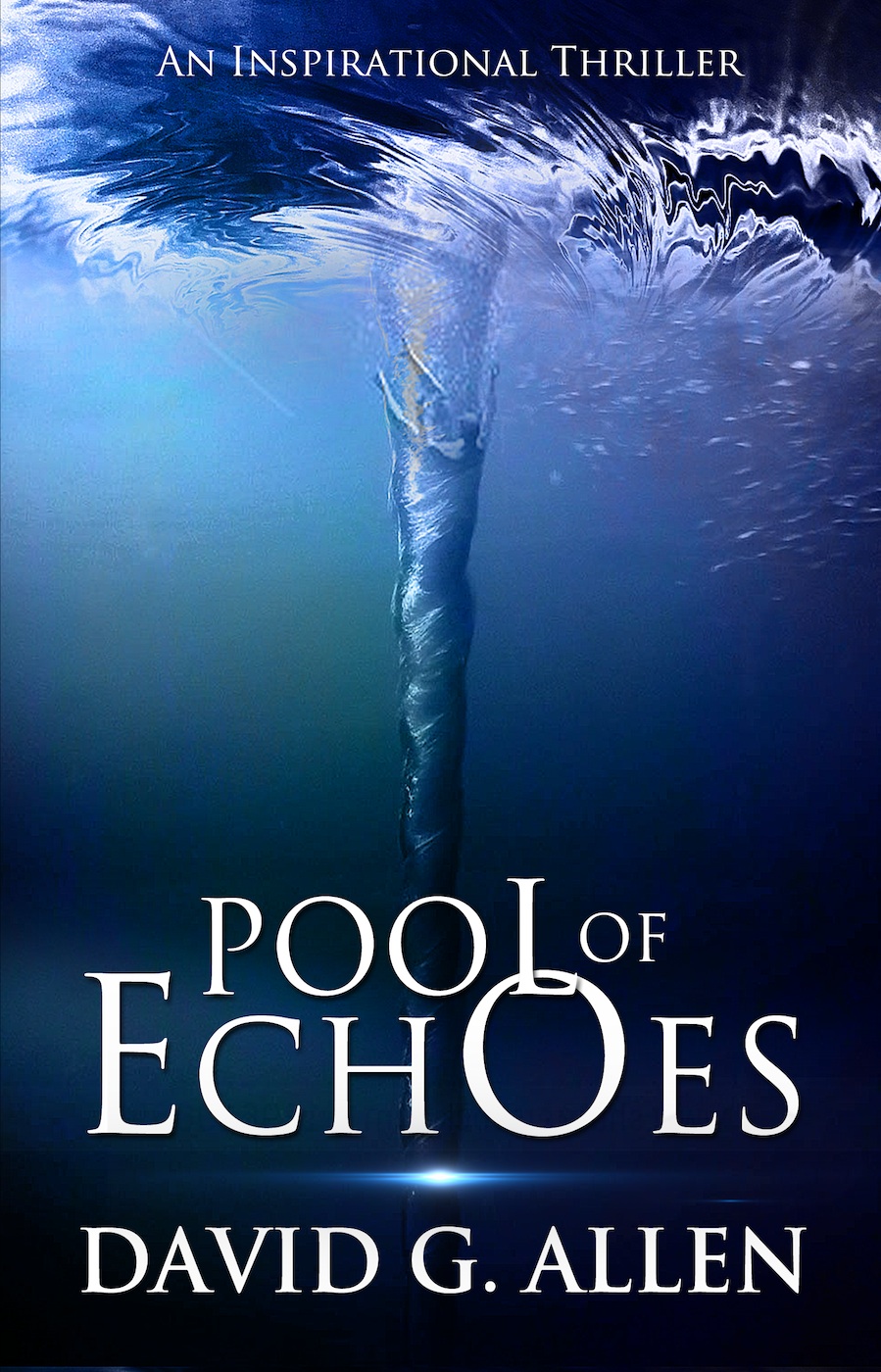
    Pool of Echoes - Book CoverPool of Echoes is out!

    Here’s it’s about:

    Jordan Mitchfield is heir to a media empire worth billions. He also sees and hears things that aren’t there.

    Then someone close puts him in an insane asylum against his will.

    When it looks like there is no way out but to take his own life, he is stopped. Is it a vision? Is what he’s seeing actually real? Is it even part of this dimension?

    Whatever it is, it opens his cell door and throws him into a dangerous time-travel adventure through his memories.

    As he goes deeper into the Pool of Echoes, he is forced to confront everything he has ever known, reconstruct his own mental health, and play a role in something much larger than himself.

    If you or anyone you know has ever questioned their own self worth, get on board this life-changing fiction thrill-ride. You will never be the same.

    I’ll make an entry on the BOOKS page so it will be easy to find later.

    This was my first of ‘hopefully’ many thrillers. I’ve noticed that my favorite stories have a bit of action and conflict in them, and it’s an underserved area for those who like Christian fiction.


    The Reason for Pool of Echoes

    The basic message of the story is: where does your self worth come from?

    If it comes from your possessions, your family, your socio-economic background, your friends – these are all things that can change. Even worse, whatever you make as the center of your self worth ends up being a chain, preventing you from a healthy relationship with whatever idol you’ve chosen – even if it’s just an idea.

    There is one exception – and that is to put your self worth someplace where it cannot be taken away.

    Wanna know where it is? Wanna know? Well I’ll tell you, but I also wanna make a living and share this great story with you, so come on down to the Amazon, where my book file yearns to visit you.

    Click here to check out the book and/or download a preview.

    Enjoy.

    -David


    Note: If you’re finding out this way rather than through the mailing list, my list server is temporarily down. The matter should be resolved in a day or two.

  • What Really Motivates Your Characters, and YOU?

    ferocious little cat by boogy_man at sxc.hu
    Requisite cat image. Bring it on, web traffic!

    Do you want to change yourself? If so, you look to examples of other people who have. Some of these people don’t exist, but they are real to you anyway.

    That’s right, I’m talking about books, movies, videogames, and stories of all kinds.

    Most big stories involve character change. We recognize that change is a part of life – a part of life that should be handled as intentionally as possible.

    There are 3 layers to characters. They mirror reality in how well we know the men and women who pass by and interact with us each day. I’ll give examples for each to show how simple, yet deep, this is.

    1. One Dimensional – Just the facts.

    Do I really need to describe it when I can just show you instead?

    I am a writer and I write. The butcher chops meat. The student studies. The jock wrestles varsity in the heavyweight class.

    2. Two Dimensional – There is a reason behind the action.

    Everybody does what they do for a reason.

    I am a cop because my father was a cop. I start businesses to make a profit because I grew up in a poor household, and don’t want my family to suffer like I did. I volunteer at a homeless shelter because I want to help those who have nothing.

    3. Three-Dimensional – There is a purpose that justifies my reasoning.

    Now you’re getting somewhere. Now we not only see the reason behind the action, but the reason for the reason. At this level, you start to really know/love/hate a person.

    I bribe people to pass laws that favor me because I don’t want any competition – I am afraid that if other people could compete on the same level as me, the world would find out that I’m not really that smart/wise/creative/competent/superior-by-birth.

    I start businesses to make a profit because I don’t want my family to grow up poor like I did – because being trapped and powerless is scarier than death, and I would not wish it on anyone.

    I read the Bible every day, even though it sometimes confuses me, because I realize the Being who cares more for me than anyone else is God; pursuing the only relationship that really matters will bring the most fulfillment.

    It’s the key to great heroes and villains.

    We don’t have time to give every person on the street three dimensions. Way too much to keep track of. Somewhere in an underground base, a government computer is short-circuiting.

    Nor can stories have all three dimensional characters, at least not without it being a very small world (Tom Hanks in Castaway is a good example). We need first, second, and third dimension characters.

    In the end, the story is about the third-dimensional character. That’s the guy with the sword who we identify with. That’s the lady with the bow and arrow.

    The problem is that we often don’t allocate the time to see our own selves as three dimensional characters. Yet we absolutely must if we want to experience the same level of change that we see as necessary – and crave in our favorite stories.

    Change is Good

    For a long time, psychology treated these underlying our motivations as tracks that have already been laid by past experiences. They couldn’t be changed. While it’s true that we can’t undo the past, it is a lie to believe that what happened to you in the past will shape and determine the rest of your life.

    Many of the great stories either involve a hero accomplishing his goal despite everything set against them, or a character who goes through a change.

    The deeper the change, the more powerful your story.

    So What About You?

    Think back to the last time you made a mistake with your job. If you’re anything like me, you don’t have to think back too far. 🙂

    First dimension: What did you do?

    Second dimension: Why did you do it?

    Third dimension: Why was your answer in the second dimension so important that you acted out?

    Example:

    I took 20 minutes with my break instead of 15.

    Why? Because the boss makes me work later.

    Why do you think he’s making you work later? Because I’m too afraid to say no to her. What if I get fired?!

    So, in this example, taking a longer break would allow you to express just enough discontent to not get fired, but enough to vent your frustrations and feel like you’re getting SOME of your time back. Right?

    If you had a character in a book that did this, and the author articulated exactly why they did it, you would totally understand and relate. You’d read on to know more about this character even if nothing has happened yet.

    By understanding the deeper motivations, and then choosing to script your own deeper motivation, you’ll become more effective.

    Eventually, you’ll come to the conclusion that you need to establish some boundaries, but in a helpful and tactful way. And if getting fired is still a concern, then you’ll ask why and learn that IF you get fired – yes – it will suck. But you know what? If you’re tough enough to have a difficult conversation with your boss, you’re also tough enough to find a better job. Chances are, it won’t even get that far anyway.

    The Third Dimension is Tough!

    You’ll look in the wrong places. You’ll probably have to think. You may even need to talk it over with trusted advisers or friends. In my opinion, that’s what trusted advisers are for.

    When you find a better third dimension, you’ll have a better second dimension, and therefore, you’ll take more effective actions.

    In the end, your own life will be a story worth telling.

    Have you ever seen yourself as a third dimensional character? How do you think it will change the way you interact with the world around you? Let me know in the comments!

  • Interview with Eva Velasquez – Timing and How She Rescues Her Ex

    typewriter by baikahl on sxc.hu
    typewriter by baikahl on sxc.hu

    In this fiction interview, I interview a young journalist who faced career suicide by helping a complete stranger rescue her ex-boyfriend. Her story is covered in my new book, and the rough draft is already done!

    For the interview I did on her ex-boyfriend, check out this interview on the victim mentality.

    Tell me about what happened, but don’t give too much away…

    I’d love to. Not long ago, I finished my work day at the television station, and discovered that Jordan Mitchfield had broken up with me.

    But why?

    He cared about me, but didn’t trust anyone. He couldn’t trust anyone. In a way, he thought breaking up with me would help me move on without him. He was protecting me.

    So he was trying to protect someone he cared about, but at the same time he was unsure whether he could trust you?

    It’s true. But it didn’t work, because I went to visit him in the mental hospital where he was committed.

    How did he react to that?

    He had a lot of mixed feelings. It was terrifying because I couldn’t direct those feelings where I wanted them to go – all it would do is make him suspicious of me.

    You mentioned at one point that a stranger at the hospital helped you. Who was that, and what did they do?

    One of the doctors helped Jordan through some risky and experimental therapy sessions. The results all depended on Jordan’s choices, and the doctor guided him through the sessions enough for him to recover.

    There’s more to it than that, right?

    There was definitely foul play involved. However, the lawyers warned me not to talk too much about that until after the trial.

    You were blacklisted after the events that happened with Jordan? How has your career progressed since then?

    I have another job lined up, but it’s the type of job I’m not going to announce until my boss does first. It should start near the end of January.

    What did you learn from all this experience?

    I learned that you can push to get information out of people. Other times, you have to recognize when your desire to know everything needs to be toned down out of respect for the people you love. If you can do that, they will come to you when they are ready. Things don’t happen according you the timing that would be ‘perfect’ for you.

    So, for me, being patient, and respecting the boundaries of those you love – those are the biggest lessons.

    There you go, patience is the calm acceptance that things can happen in a different order than the one you have in mind.

    Authordavid.com News

    I plan on moving my blog to a self-hosted site very soon. It will probably happen next weekend, though the change may take a few weeks. During that time, there may be changes to the layout, design, and a few other things. It’s all part of my diabolical scheme to make this blog one of your favorite places on the web.

    If your friends don’t have an internet, tell them to get one, so they can read authordavid.com!

    If you find yourself visiting the site in the next few weeks, wondering what’s going on – don’t worry! It’s just a growth spurt.

  • Operant Conditioning, And The Silver Lining in Our Obsession with the Zombie Apocalypse

    black swans and zombies
    Black Swans by unknowme at sxc.hu
    Zombies (not pictured)

    Zombies have become extremely popular in our culture.

    They have been a staple of our entertainment for a long time. Today the trend continues with films like World War Z and shows like The Walking Dead.

    It looked so fun that even the U.S. Military wanted in.

    Critics hammer this trend, perhaps because ‘any publicity is good publicity’, and they want it to continue. Others hate it because it appears to reflect that we as a culture are obsessed with disease, decay, death, and destruction. I agree, but we’re not going to go into that right now.

    The Walking, Living, 28 Days, Dawn-of-the-Shawn-of-the-Legend, Evil Dead

    What came out of our obsession with zombies is the self help section that has swelled with useful guides to surviving the zombies.

    But zombies do not exist, you say? Not in the literal sense…

    True, but zombies represent an idea: the idea that all the systems of human decency, infrastructure, and survival have great flaws. If any of these flaws are exploited, many of us would be in danger. It matters less that this danger comes from a fictitious undead monster, and more that people are now talking about what they should do if the things we rely on every day become unreliable.

    Scoff all you want about zombies. They may not be real, but operant conditioning is real. Black swans can occur. And it is worth our time to consider how they would affect our lives.

    Operant Conditioning

    • You write a headline, and it does really well.
    • You buy flowers for your date, and she loves them.
    • You ask a question at an appointment, and the ensuing conversation leads to a sale.

    What do we do after these things happen?

    More of the same.

    Why?

    If we want the same results on a consistent basis, we’ll keep doing the activities that led to those results.

    Most of the time, there’s nothing wrong with that. It’s how we get good manners, make friends, and provide for our families.

    It’s called operant conditioning – a method of learning that occurs through rewards and punishments for behavior. Through operant conditioning, an association is made between a behavior and a consequence for that behavior.

    And I have a confession to make: when I figure out how to make the most entertaining, moving, and inspirational stories out there, I’ll probably keep doing it.

    The Dark Cloud of Operant Conditioning

    Whenever you need groceries, you go to the store. Because that’s where the food is.

    Imagine: one day you go to the store, and there aren’t any groceries – at any of the stores.

    Your life is in immediate danger. In this hypothetical scenario, you may figure something out, even if it takes a few months to find a consistent source of food. When that source is secured, operant conditioning will cause you to make that your new ‘grocery store’. When you need food, you’ll go to that ‘store’ instead, whether that’s a farmers’ market, a neighbors ranch, eating shrubbery in the woods, or growing your own food.

    If you bought flowers for your wife every day, expecting an outpouring of love and affection every time, then you are setting a very unrealistic expectation.

    Eventually, to get those results, you will have to do something different: A special date night, vacation, taking care of the kids for a night so she can have time to herself, compliments – you’ll do something different to show that you care.

    Clearly, operant conditioning, in an activity-to-results scenario, is flawed. At the same time, we have to do what works, or our lives will be a constant state of panic. Life experience has to count for something. We don’t have time to reinvent the wheel every single day with everything.

    Operant conditioning isn’t going away.

    Systems Will Save Your Life

    So, how do we use operant conditioning in a way that makes us less vulnerable to big changes?

    We use systems.

    Once you find that your spouse’s primary love language is Quality Time, you’ll use a system to find things to do that he’ll like where you can spend time together, instead of just watching a movie once a week.

    If you’re really worried about the grocery store conundrum, you’ll have two month’s supply of storable food and maybe a small garden where you can brush up your skills on growing your own food in just a few minutes a day. You can still go to the store, and it’s possible that no problems will ever occur. If something bad does happen, though, you have a system that deals with that sort of thing.

    Instead of just making a list-style headline (5 ways to drive your boss crazy) for your blog, you’ll learn about a system that uses proven principles, like the 4-U’s of effective headlines. From there, you can create with very little fear.

    In my own writing, I have a system for putting together stories. While it changes a little with each project, the foundation is pretty much the same. I’m now looking for a similar system for Editing and Rewriting.

    Operant conditioning is your friend only if you use it on systems, rather than attaching it to specific actions. When you have good systems in place, you are free to repeat whatever works best for you – this time with the confidence that you’ve planned for any unexpected changes.

    How have you changed how you live or work to prepare for the unexpected? Let me know in the comments!

  • Interview with Author Jevon Knight – King Larsen, Trinidad, and More

    There are a lot of great authors out there with stories to tell, and advice for people who want to write.

    For my first in a who-knows-how-many interview series, I’d like to introduce Jevon Knight, an author who first caught my attention on the wordpress community. Jevon is the author of King Larsen, a medieval fantasy novel about a king who abandons the throne for a chance to save the one he loves.

    Your book is about a king who abandons all for love, yet that decision isn’t all positive. What theme were you trying to get across?

    The theme is the consequence of not being able to let go of what we love. As self-aware beings, when we love something, whether alive or material, we get so attached to it that we become emotional and depressed when it’s gone. Not everyone makes positive decisions or logical actions once they reach that point, and some people are never the same again. You can relate to this at funerals, where people mourn in widely different ways.

    I remember attending a funeral where the elderly husband actually begged his wife to get up and walk, like if she was just pretending. I figured, what if I had a protagonist who never recovered from that state, and someone told him that his love was actually not dead? I made him a king to show the reader how bad his despair was and how much he was willing to give up to get her back.

    But it’s not just about him. In this book, there are several characters who have lost loved ones, and they each deal with it in their own unique way, both negative and positive.

    What big challenges did you encounter with your book that you did not anticipate?

    This book is based on an era that is long gone, the medieval period of about the 8th century or so. And while there are several books and movies that cover this time, some things are skewed to satisfy the desires of entertainment. That is why it’s so important to research the world you want to write about, even if it’s not real.

    Long after I started my book, I just happened to watch a documentary where it demonstrated that a sword cannot penetrate the metal armour of a soldier, something that you always see in those games and movies we love. A spear, and an arrow from a long bow could do it because of the amount of force, but a human just cannot swing a sword hard and fast enough. Even though my book has many fantasy elements, I still want to keep it realistic by satisfying basic laws.

    So, if a weapon as staple as a sword cannot penetrate metal armour, how does a sword-wielding soldier fight?

    I did some research and found out that warriors used a fighting style where they would aim for the gaps in armour, like the neck. I had to go back and adjust the writing in my fight scenes to cater for this, and always kept this rule in mind. 

    You’re from Trinidad and Tobago, yet you write a lot about medieval style kingdoms. Why go in that direction? Does it just come naturally?

    I actually grew up on fairy tales and fantasy stories like the Hobbit. I’m much more interested in worlds with vast forest, mountains, and amazing characters. So, while the culture of my country prefers literature, there are still those who are into lore from different parts of the world.

    But I do recognize that Trinidad and Tobago has some interesting folklore. I actually plan to write a novel that combines historical tribes with our local folklore, and elements of Carnival. So you might have a Carib tribe that encounters creatures like dwens, lajabliss, blue devils, and a beautiful feathered woman. 

    Carnival happened a few months ago. Did you flee the island or live it up?

    I love Carnival so I prefer to live it up. I like to go all-inclusive fetes, and play our mud mass called Jouvert. It can be expensive though, so I have to select the good ones. After all, there is life, and writing, after Carnival.

    Are you working on any big projects outside of novel writing?

    No. I pretty much write, go to work, and write some more. I did try a couple of business ventures, but writing seems to be the only thing that I kept at.

    What is your next book project about? Any hints?

    The next book I plan to write is called One Kingdom. The theme for this one is mentorship and a twisted sense of protection. It’s about two brothers: the older recently became king, the younger swore to protect. There is no jealousy, but the younger despises the king’s concept of peace, and makes several bad decisions in an attempt to make him understand that true peace can only be achieved through total domination.

    Prince or Michael Jackson – and why?

    Michael Jackson, definitely. So many great songs, like The Girl Is Mine, and you can’t beat the moon walk.

    If you could only give one piece of advice to writers wanting to get their stories on paper, what would it be?

    Don’t think you have to wait until you have an MSc in Literature, and completed all the creative writing courses the world has to offer to start writing a novel. If you have a story in mind, and you have a dream of getting published, then grab a chair, grab a laptop, and start writing.

    Where can people go to find out more about your books and/or buy them?

    I’m hoping to have my first novel, King Larsen, published by December 2013. You can go tohttp://jknightsworld.wordpress.com/ and click on the links under My Books to read the about and excerpts from my books.

    Describe an awkward event from a past job that you didn’t like?

    When I first started working as a computer technician, I was real enthusiastic about getting all my work done. I remember I was given a project to install CD ROM drives in about 40 computers. I did it pretty fast, and one evening I was left with nothing to do but listen to the radio. When the boss called asking for a co-worker, and I told her he was not around, she asked what I was working on. Being the naive new guy, I said, “Well, I’m finished with all my work, so I’m just listening to the radio.” She was so shocked and confused by that answer that she stuttered her following command, which pretty much meant get to work. I never forgot the lesson I learned that day: never rush to finish all your work, always pace yourself. Not exactly something you want to preach to your kids though.

    If the president signed a law requiring everyone to buy your book, what passion would you pursue with all that King Larsen money?

    I would definitely travel more. I want to visit famous sites, like the Coliseum of Rome, and the Great Wall of China, and go on hikes all over the world.

  • Why Theme Still Matters, Even In Escapist Entertainment

    You may not see the thread, but without it, you got nothing.
    brocade by michaelaw at sxc.hu

    Pictures are for entertainment; messages should be delivered by Western Union – Samuel Goldwyn (of MGM)

    If you’re writing a sermon, shame on you if there isn’t some sort of takeaway.

    If your ads need to sell product, the theme should communicate that your product solves a deep-rooted need within.

    Writing for entertainment is different. Novels, Videogames, and Movies are all escapist mediums. With those, we want to be entertained, to ‘get away’ from our present situations.

    When that’s your objective, the idea that we might have to do something lates makes it more difficult to relax.

    In this case, theme needs to be almost invisible. But that doesn’t make it less important. If anything, it makes theme more crucial.

    Theme Helps Answer Most of Your Pre-First Draft Questions

    Without theme, it’s difficult to make the key decisions necessary to shape your story.

    • Which characters are the best ones to tell the story?
    • Why would a city be a better setting than an isolated island?
    • Would a funeral be a better place for a family fight than a graduation party?
    • What should your conflict be about?

    I kind of knew what my theme was about when I started writing my current book: The search for truth is difficult, and takes multiple attempts, but it is worth it in the end.

    Theme needs to be communicated by the characters actions. Doing so only with words will turn people off.

    In real life, we have enough people telling us one thing, while doing another – that doesn’t resonate with us.

    How Theme Guided My Decisions

    The search for truth is difficult, and takes multiple attempts, but it is worth it in the end.

    With this theme in mind, I knew that one character had to go through this journey. Difficult, disempowering lies needed to grab hold of my main character.

    Then, the opposite:

    There had to be another character who NEVER did this soul searching, but seemed to have control of everything and everyone. Eventually, the main character needed to surpass this unmoving dinosaur – forever set in their ways.

    There also had to be other characters who either weren’t aware or thought the search was a waste of time.

    Is my theme the same as what it will be when the whole thing is finished? Mostly.

    Over time, I will refine it. That’s a big part of writing and rewriting.

    For me, not knowing your theme until your finished is like using a scalpel to turn a kangaroo into Miss Universe – there will be a lot of deep cuts, and there’s a high chance it won’t work.

    You can still communicate your message – and Tell A Great Story

    If you don’t want people’s lives to be different, you don’t really have anything to say. There’s nothing to talk about.

    Even if your story makes no change whatsoever, the thought that it could may give you the juice needed to follow through with your project to the end.

    Not every writer does it this way – it’s only how I do it.

    A few writers, after many false starts and hundreds of revisions, can make a good story without knowing their theme at the beginning. Even then, they likely refined their craft and subconsciously had an idea of it anyway.

    Is it obvious to you when someone is trying to communicate a theme in a story? Has it ever made you love a story more? Less? Let me know in the comments…

  • Top Secret: 3 Free Screenwriting Resources (that I probably shouldn’t show you)

    image by spekulator on sxc.hu
    image by spekulator on sxc.hu

    Psst.

    You want to write a great book?

    Think like a movie writer.

    You want to write a great movie?

    Keep your voice down.

    Check out these free resources. But don’t tell anyone else.

    1. The “Go Into the Story” blog on the blacklist website.

    If you’re even a few months behind me, you’ll be shocked to learn how many of your favorite movies first showed up as scripts on the blacklist. This blog is extremely useful advice for writers, and the blogroll (left side) has links to so many useful sites that your eyes will bleed and your brain will catch fire.

    2. Austin Film Festival Blog

    God forbid, if a meteor crashed into both Burbank and Los Angeles, another city would need to pick up the filmmaking slack. Austin, Texas would be a prime contender. I am a bit biased, though – I live there. This is one of the big screenwriting festivals, so they are able to get guest posts by people in the industry that a lot of other blogs won’t. No comments section, though.

    If you can, come to the next one in October. Look around and you’ll probably see me at some roundtables.

    3. Wordplayer.com –

    My favorite writing site. Don’t let its design fool you. As a cartoon merchant once said: Like so many things it is not what is outside, but what is inside that counts. THIS IS NO ORDINARY LAMP!

    This site has columns by Terry Rossio and Ted Elliot. If those are new names to you, they have written Pirates of the Carribbean, Mask of Zorro, Shrek, Aladdin, and most movies you grew up loving. Each of their articles are eternally useful and never go out of date. I’ve read them all, and plan to go over them again when I finish screenplay #2.

    Can you help me?

    Okay, talking louder now.

    I’m looking for good websites for improving tone and prose for revising my book, which is nearing first draft completion. Can you help? Let me know of any good ones in the comments.


  • 5 things I wished I knew when I started writing fiction

    image from anitab0000 at sxc.hu;  "Whoops, wrong building!"
    image from anitab0000 at sxc.hu;
    “Whoops, wrong building!”

    Here are some takeaways from spending way too much time writing stories.

    Hopefully they will help you to be more productive as you spend too much time writing or reading stories on your own.

    1. How you describe something can amplify or undo a reader’s view of what happens.

    •             A terrifying monster is never ‘frazzled’, unless you want to laugh at him.
    •             The lumberjack rarely prances, unless he’s in a Monty Python song.
    •             And the Lorax never rampages.

                The best plot in the world can be sabotaged by poor word choice.

    2. Every character in your stories will have some element of yourself in them. That’s not always good, and it’s not always bad.

    Empathy with a sadistic villain can scare you. There is, however, a silver lining. The story exists so you can graffiti reality – and follow a thought pattern to its end where you can cringe at the consequences of that mentality. By doing this, you refine your character via mental war games. It shows that we don’t actually want to be Walter White (Breaking Bad), Gordon Gekko (Wall Street), or Nicholas Cage’s character in Lord of War.

    Yet you must be careful that every character is not just a clone of yourself. We are all unique individuals. This means that what matters to you may not matter to someone else. The way you finally ‘get’ a lesson may be vastly different from how most people do. What seems revolutionary to you may be last year’s news to everybody else.

    Try to differentiate your characters as much as you can, then don’t worry when you fail.

    3. FK scores can help you improve.

    No, it’s not a crude way to say you need improvement in the bedroom. FK stands for Flesch-Kincaid score. Master copywriters use this to determine how readable a story is.

    “Successful writers have two skills: coming up with good ideas and expressing them clearly” – Michael Masterson

    The point is not to make your story appeal to the lowest common denominator. Rather, you want to remove unnecessary confusion from your writing. I’ll often run this test 3-4 times per blog post.

    Here’s how to do it in Word:

    1. Go to ‘Word’ in the top menu bar (next to the apple if you’re using a mac)
    2. Click Preferences, then ‘Spelling and Grammar’ in the top row of icons.
    3. The bottom check box in the ‘grammar’ section will say ‘Check readability statistics’. Check it.
    4. Now, run a spell check in ‘tools’ for your chapter/blog post. At the end, it will show your score. The higher your ‘Flesh-Reading Ease’ is, the easier the document is to read. The lower your ‘Flesh-Kinkaid Grade Level’, the easier it is to read.

    Choose simple words. Shorten your sentences. Cut down your paragraph size. Root out your adverbs and transform passive voice sentences into active voice. Those are the best ways to improve your score.

    Want to learn more about how it is used? Check out this link.

    4. Break the rules, but learn them first.

    I’ll use passive sentences all the time. I tend to use them in dialogue with characters I want my readers to dislike.

    • Politicians often say ‘mistakes were made by the administration’ instead of ‘I’m sorry.’
    • Bureaucrats claim: “That rule wasn’t approved in my department.”
    • Know-it-alls who quip, “It was indubitably broken by a crude ignoramus.”

    Shut. Up. I can see readers putting on their boxing gloves now.

    The point is, once you learn why things work the way they do, you can break the rules to your advantage.

    Where do you learn the rules? One of my favorite starting points is Save the Cat, but you can start wherever you like.

    5. Luckily, we are drawn to the same stories.

    If you want to fill your brain with paralyzing self-doubt, go here. It shows how all your original ideas are tripe, repetitive, and predictable. Read, enjoy, and then ignore.

    Georges Polti, in his book The Thirty-Six Dramatic Situations, says there’s only 36 types of stories in existence anyway. Many of these are largely ignored in our culture.

    In Hero with a Thousand Faces, mythologist Joseph Campbell tries to tell me that there’s just one, but his FK score is criminally high.

    We are human beings. In the last few thousand years, very little has changed about that.

    Write the same story, using the unique voice that makes you different from every person that’s come before you. If you do this enough times, it is more than enough.

     What did I miss? (I guess that’s lesson six – you always miss something).  Let me know in the comments.